




Fresh Sunchokes (Jerusalem Artichokes) — Dug Fresh and Shipped for Eating

Sunchokes, dug fresh and shipped for your kitchen
Crisp and nutty raw. Sweet and creamy roasted.
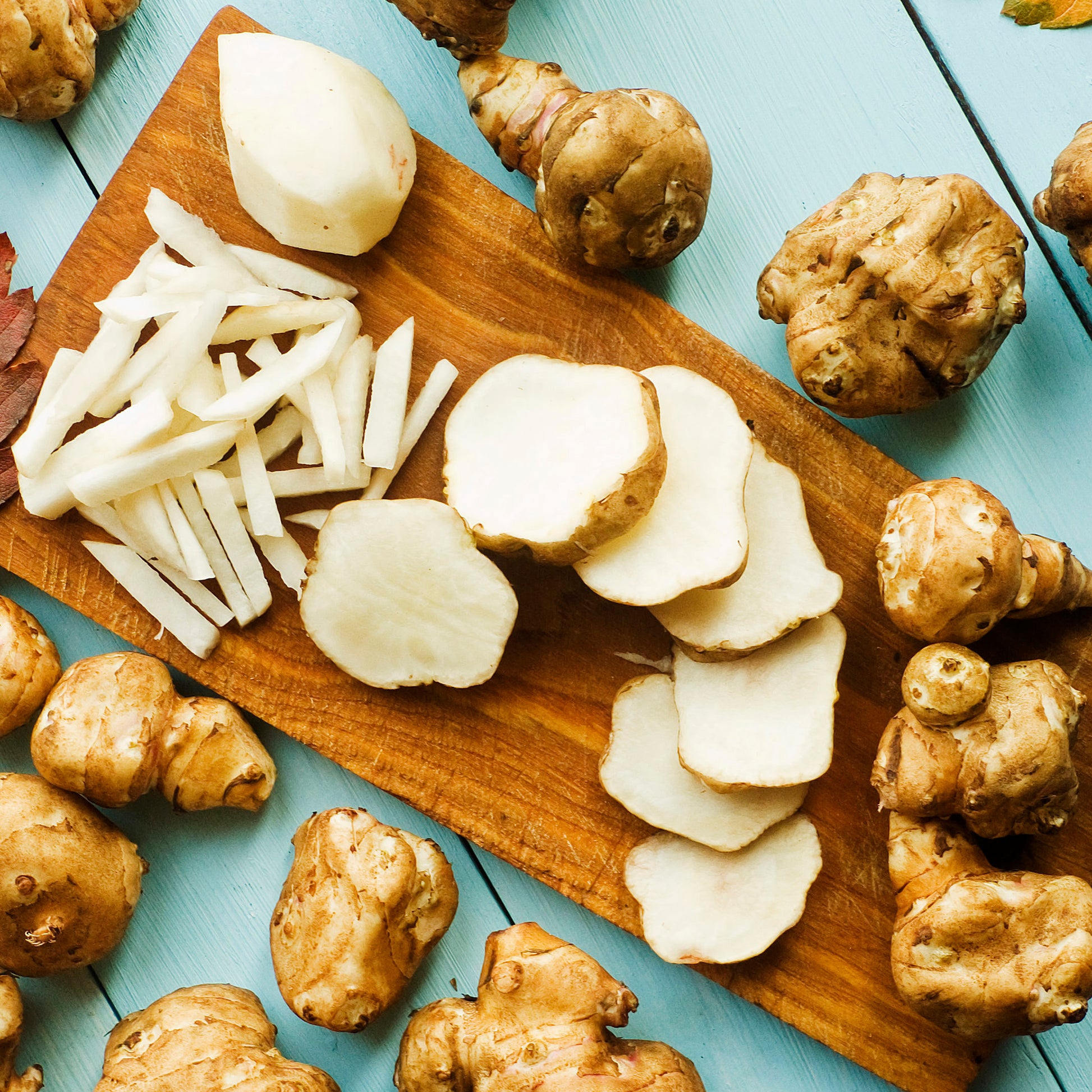
Sunchokes, or Jerusalem artichokes, are a root vegetable in the sunflower family, native to North America and grown here long before anybody brought a potato over. Raw they're crunchy and a little sweet, closer to a water chestnut than a potato. Roasted they go soft and nutty and caramelize at the edges. They hold their shape in a soup or a stew where a potato would fall apart.
They're also one of the few vegetables that's genuinely better after a frost, which is when we dig them.
The same exact tubers, packed for the kitchen
These are the identical sunchokes we sell for planting. Same crop, same beds, same day of digging. The only thing that changes is how we process them for the box.
Planting orders go out nested in cedar chips, which keeps them from drying out on the way to your garden. Great for a tuber that's about to go in the ground. Annoying for one that's about to go in a pan, because you'd be washing cedar out of every knob before you could cook.
So produce orders skip the cedar and skip the growing guide. That's the whole difference.
Which means the obvious thing is also true: you can plant these. Every one of them will grow. And you can eat the planting ones if you'd rather, once you've rinsed the cedar off. It's one vegetable. Buy whichever packing suits what you're doing with it.
Why buy them from us
A customer wrote to us recently and signed off with this:
"so u are king of the jerusalem artichoke world, cause when i google, google highly recommend u."
We'll take it. This is our crop.
What matters on your end is that we know how to ship them, and most people don't. Sunchokes don't want air. Left sitting out they dry down fast, and a shriveled sunchoke is a rubbery, disappointing thing to cook with. That's why produce sunchokes so often show up soft.
We pack ours in sealed bags with a pinhole or two, the same day they ship, so they arrive with the moisture they left with. Firm, crisp, ready to cook.
How to cook them
You don't have to peel them. The skin is thin and it crisps up nicely. Just scrub them well, since they grow underground and the knobs hold dirt.
Roasted is where most people land. Halve them, toss in oil and salt, 400 degrees until the edges brown and the insides turn creamy.
Raw, sliced thin into a salad or a slaw, they're crisp and slightly sweet.
In soup they blend into something silky that tastes like artichoke hearts, which is where the name came from. They aren't related to artichokes at all. They're a sunflower.
They also pickle beautifully, which we'll come back to in a second.
How to keep them
Same principle as the shipping. Sunchokes do not want air.
Keep them in a sealed bag in the crisper drawer and use them within about two weeks. The fridge isn't reliable much past that. If you've got more than you can get through, pickle them or roast and freeze them rather than letting them sit and go soft.
If you bought a bigger box and want to keep it properly, here's how we do it: How To Store Your Sunchokes For Winter.
A note on the gas thing
You may have heard that sunchokes give people gas. Some people affectionately call them fartichokes.
Some people do report it, so the first time you eat them, start with a small amount and see how you do. Sunchokes store their energy as inulin instead of starch, and your gut handles inulin differently. That's all it is.
Most of the people who have trouble with it are eating them raw. Cooking takes most of it away, so if you're worried, cook them the first few times and go from there.
A customer called me about exactly this. They loved the raw crunch and didn't want to give it up, so they pickled a batch instead. The fermentation solved it completely.
Tubers that have been through a frost or sat in cold storage a while also tend to be sweeter and easier on people.
If you decide to grow them
Sunchokes are perennial. Plant them once and they come back every year on their own, with no replanting and nothing to store, because the ground keeps them for you.
Put a few of these in the dirt instead of the pot and you'll find out. Our step-by-step guide is here: How to Plant Your Sunchoke Starts. If you want them packed properly for the garden, with cedar chips and a printed guide in the box, that's our sunchoke planting listing.
Common questions
Do I need to peel sunchokes?
No. Scrub them well and cook them with the skin on. It crisps nicely when roasted.
What do sunchokes taste like?
Raw, like a water chestnut with a little sweetness. Cooked, nutty and creamy, close to an artichoke heart.
How long do they keep?
About two weeks in a sealed bag in the fridge. They dry out quickly in open air.
Are they related to artichokes?
Not at all. They're a sunflower. The name comes from the flavor.
Can I eat them raw?
Yes, and they're excellent raw. Start with a small amount your first time.
Can I plant these instead of eating them?
Yes. They're live tubers and every one will grow. The only difference from our planting listing is the cedar chip packing and the growing guide.
Facts
- Botanical name: Helianthus tuberosus
- Also known as: Jerusalem artichoke, sunroot, wild sunflower, earth apple
- Harvested: After the first frost, for flavor
- Eat them: Raw, roasted, fried, in soup, or pickled
- Peeling: Not necessary
- Keeps: About 2 weeks sealed in the fridge
- Packed: The same day it ships, no cedar chips to wash off
- Also plantable: Yes, these are live tubers
- Sizes: 1, 5 or 20 pounds
Our guarantee
If anything's wrong with your order, call or text me at (760) 835-8711 and I'll replace it or refund it, whichever you'd rather. That's my personal line and I answer it myself.
Free shipping.