




Taro Bulbs (Colocasia esculenta) — Live Green Elephant Ear Bulbs for Planting

The only thing in your garden that's both a six-foot centerpiece and dinner
Most people plant elephant ears for the leaves. You can also eat them.
Colocasia esculenta is the plant your neighbors will assume you hired someone to install. Heart-shaped leaves the size of a serving platter, on stalks that run four to seven feet by late summer. It fills a shaded corner, screens a fence line, or anchors a patio pot better than anything else you can plant from a bulb.
It is also taro. The same root that feeds more people worldwide than most crops you could name. Gabi in the Philippines, dasheen in the Caribbean, kalo in Hawaii, cocoyam in West Africa. You dig it in fall, after the foliage has done its work all summer.
That's the case for this plant in one sentence. It's the rare thing in a garden that pays you twice.
What you get for the money
- 3 bulbs, $13.50 ($4.50 each)
- 10 bulbs, $20.96 ($2.10 each)
- 15 bulbs, $24.00 ($1.60 each)
- 25 bulbs, $27.50 ($1.10 each)
Twenty-five bulbs cost about twice what three cost. If you're planting a border, a privacy row, or a real food patch rather than a single container, take the larger count. The math stops making sense at the small end.
What actually arrives
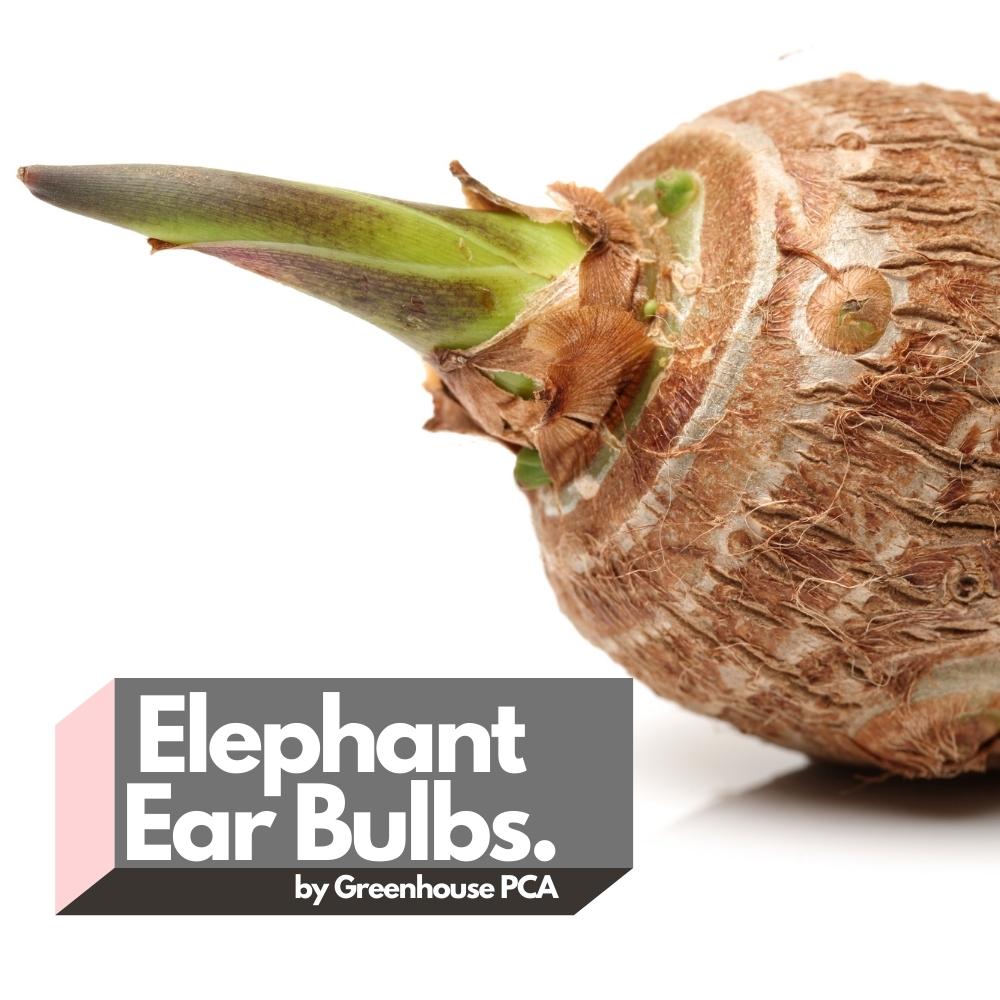
Live bulbs, packed the same day they ship. Depending on the season you'll get dormant bulbs, or bulbs that have already broken dormancy with visible shoots. Both plant the same way and both come up. A dormant bulb planted in May catches a sprouted one by July.
Botanically these are corms rather than true bulbs. They're solid all the way through instead of layered like an onion. The trade calls them bulbs and so do we, but you'll see both words used for the same thing.
Every bulb is picked by hand from that week's stock, sized, checked and packed by us, not repackaged by a fulfillment center that has never seen the plant. We don't ship dried-out bulbs from a bin. That's the whole reason this listing exists.
How to grow it
Wait until your soil is genuinely warm. After your last frost, not the week of it. Cold soil is the one thing that will stall this plant.
Plant four to six inches deep in rich soil, blunt end down. Full sun to partial shade both work, and more sun means bigger leaves if you keep up with the water. Shoots usually break ground in one to three weeks once the soil warms.
Then water it more than you think. Taro grows wild at pond edges and in flooded paddies. A low spot that stays soggy and kills everything else is exactly where this plant wins. Feed it during active growth and the leaves get noticeably larger.
In zone 8 and warmer, leave the bulbs in the ground over winter and the clump comes back bigger. Colder than that, lift them after the first frost blackens the leaves, dry them a few days, and store them somewhere that doesn't freeze.
We wrote the whole thing up step by step here: How To Plant Your Elephant Ear Bulbs.
How to eat it
Harvest after frost knocks the tops down, or any time the plant is mature. The main corm is the prize. The smaller offsets around it (cormels) are next year's planting stock, so save a few.
Taro must be cooked. Every part of the raw plant contains calcium oxalate and will burn your mouth. This is not a plant you sample in the garden. Boil, steam, roast or fry it and it's excellent. Nuttier and drier than a potato, and it holds its shape in a stew where a potato would fall apart. The young leaves are eaten cooked too, in dishes like laing and callaloo.
Common questions
Is elephant ear the same thing as taro?
Yes. Colocasia esculenta is sold as an ornamental elephant ear and eaten as taro. Same plant, two markets. Some other plants called elephant ear are different species and are not edible.
Can you eat elephant ear plants?
You can eat this one, cooked. Raw taro contains calcium oxalate and will irritate your mouth and throat. Cooking breaks it down. Never eat any part of it raw.
How deep do you plant taro bulbs?
Four to six inches deep, blunt end down, in warm soil after your last frost.
How long until they sprout?
Usually one to three weeks once soil is warm. Cold soil delays it, sometimes by several weeks.
Do they come back every year?
In zone 8 and warmer, yes, and the clump gets larger each season. In colder zones, lift the bulbs after the first frost and store them somewhere frost-free until spring.
How much sun and water do they need?
Full sun to partial shade, and more water than most garden plants. They are happiest in ground that stays consistently wet.
Plant facts
- Botanical name: Colocasia esculenta
- Also known as: taro, gabi, dasheen, cocoyam, kalo, poi, green elephant ear
- Form: Corm, sold and shipped as a bulb
- Mature height: 4 to 7 feet
- Sunlight: Full sun to partial shade
- Water: High. Thrives in wet ground and at pond edges
- Planting depth: 4 to 6 inches, blunt end down
- Sprouting: Typically 1 to 3 weeks in warm soil
- Hardiness: Perennial in zone 8 and warmer. Lift and store in colder zones
- Climate: Tropical, sub-tropical, and temperate summers
- Edible parts: Corm and young leaves, cooked only, never raw
- Harvest: Fall, after the foliage dies back
- Shipping: Free shipping
Our guarantee
If there's a problem with your order, call or text us at (760) 835-8711 and we'll send a replacement or refund it, whichever you'd rather have. No time limit, and nothing to mail back. That's my personal line and I answer it myself.
We don't publish germination percentages, because nobody can honestly promise what your soil and your weather will do. What we promise is that the bulbs leave here alive and healthy, packed the same day they ship, and that if something goes wrong we take care of it.
Free shipping. Order the count that fits your patch: 3, 10, 15 or 25 bulbs.